A quiet inquiry into justice, identity, and the world we accept
There is a quiet discomfort in imagining a world where you do not know who you are.
No name. No caste. No religion. No wealth. No gender. No language to anchor you to a place in society. Just a mind, suspended in uncertainty—asked to design the rules of a world you will soon enter.
This is the essence of the Veil of Ignorance, a thought experiment proposed by John Rawls—not merely as an abstract idea, but as a moral test. A simple, unsettling question:
What kind of society would you build if you had no idea where you would end up within it?
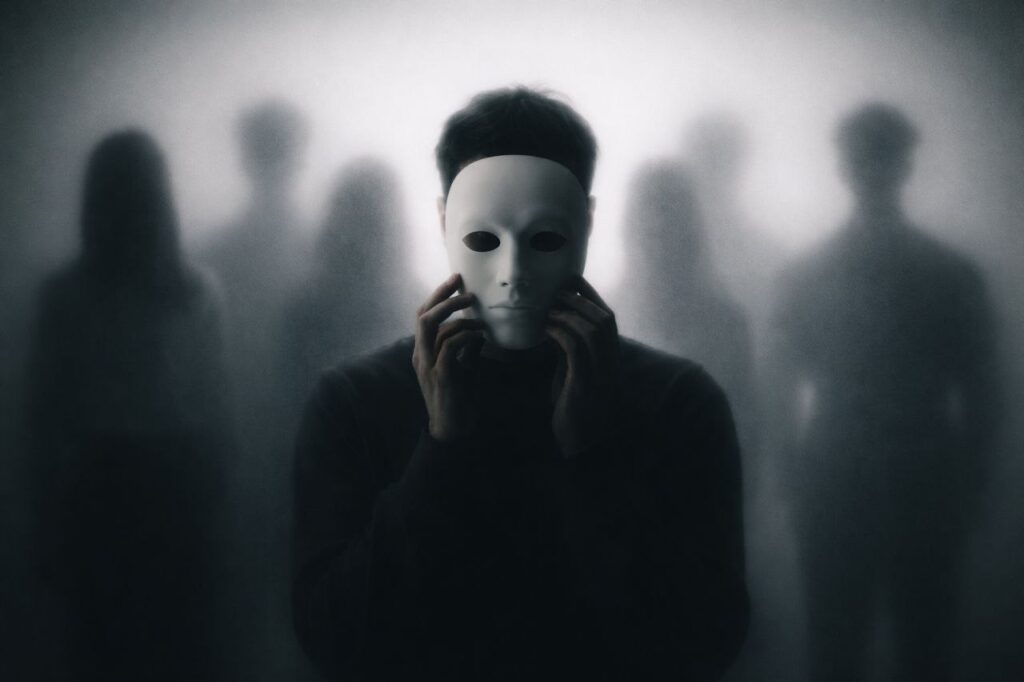
Behind the Veil
Behind this imagined veil, the familiar pull of self-interest fades.
Privilege has no voice. Fear settles equally on every shoulder. Hope becomes measured, careful, deliberate. Justice—if it is to be anything real—must extend its hand to all, not just those who might resemble you.
You are no longer shaping a world for yourself.
You are shaping it for every possibility of who you could be.
And in that act, everything changes.
Stepping Back Into Reality
But step out of the veil, and the world returns as we know it.
In India, identity is rarely something we choose—it is something we inherit.
Before we speak, we are named.
Before we choose, we are placed.
Caste, class, religion, region—these are not mere labels; they quietly determine access, dignity, and opportunity. The distance between two lives is often decided long before either begins.
Now ask yourself:
Would you still accept this arrangement if you did not know which side of it you would be born into?
Would you defend a system where some must struggle for what others receive by default?
Would you justify inequalities that could just as easily have been yours to bear?
The Question That Remains
The Veil of Ignorance does not hand us answers.
It does something far more unsettling—it removes our excuses.
It asks us to imagine justice without familiarity.
To think beyond identity.
To confront fairness without the comfort of knowing where we stand.
And perhaps that is its quiet power.
Not in changing the world overnight, but in unsettling the certainty with which we accept it.
A Mirror, Not a Solution
Once you have glimpsed a life unanchored by your own identity,
it becomes difficult to see the place you now inhabit as wholly earned.
And even more impossible to turn away from those who were never offered a choice.
(Pause here.)
And ask yourself—if the veil were real,
what kind of world would you choose to enter?